Authentic Visuals: Integrating Western Animal Art
In the current landscape of digital design and physical crafting, there is a distinct shift toward imagery that feels grounded, historical, and texturally rich. The modern consumer is increasingly drawn to aesthetics that tell a story of the rugged outdoors, particularly themes involving wildlife and the cowboy lifestyle. This specific visual niche, often referred to as Western Animal Art, taps into a sense of nostalgia and authenticity that mass-produced graphics often lack. For designers and creatives looking to bridge the gap between digital convenience and handcrafted appeal, understanding how to utilize high-quality assets in this style is essential for standing out in a saturated market.
When we talk about Cowboy Wildlife in a design context, we are discussing a very specific visual language. It is not merely about placing a picture of a horse on a background; it is about capturing the spirit of the untamed West. The visual characteristics often include detailed line work reminiscent of vintage engravings, earthy color palettes dominated by sepia, charcoal, rust, and sage, as well as compositions that suggest movement and freedom. The personality of this style is inherently rugged yet elegant. It evokes a sense of durability and timelessness. Whether you are working on a logo for a rugged outdoor brand or designing invitations for a ranch wedding, the appeal lies in its ability to communicate strength and heritage without needing excessive explanation.
The Power of High-Resolution Assets in Modern Crafting
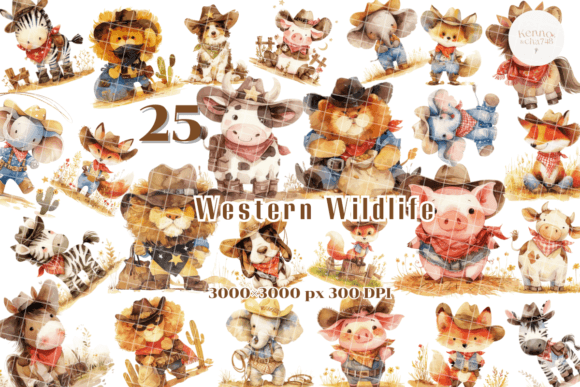
For the serious crafter, entrepreneur, or designer, the quality of the source material dictates the quality of the final product. This is why sourcing a collection of Western Animal Art assets—specifically those provided as high-resolution PNG files with transparent backgrounds—is a game-changer. A resolution of 300dpi at 3000x3000 pixels ensures that the artwork remains crisp and clear whether you are printing a small tag or scaling up for a book hardcover. The transparent background is particularly vital for packaging design and scrapbooking, allowing the intricate silhouettes of wildlife to blend seamlessly into various textures and colors without the hassle of manual masking.
Consider the versatility these assets offer across different project types:
- Editorial and Publishing: Use these graphics as chapter headers or spot illustrations in self-published books to reinforce a narrative about nature or history.
- Stationery and Invitations: For cardmaking and handmade stationery, these images provide a focal point that feels premium and artisanal.
- Digital Branding: In web design and social media graphics, these elements can break the monotony of standard stock photography, offering a unique visual hook that increases engagement.
- Physical Decor: Applications like decoupage, decorated furniture, and jewelry making allow the artist to take digital precision into the tactile world, creating pieces that have a high-end boutique feel.
Strategic Branding with Western Aesthetics
For small business owners and marketers, visual consistency is the bedrock of brand recognition. Integrating Cowboy Wildlife imagery into your brand identity can significantly influence how your audience perceives your business. If your brand values include authenticity, craftsmanship, or a connection to nature, these visuals act as a shorthand for those values. When a customer sees a consistent use of high-quality western motifs across your packaging, website, and social feeds, it builds a subconscious trust in the quality of your product.
However, success lies in the execution. It is easy for western themes to become kitschy if not handled with a modern design sensibility. Here is how to ensure your usage remains professional:
- Visual Hierarchy: Treat the animal art as a hero element. Do not clutter the design with competing fonts or busy patterns. Let the detail of the artwork breathe.
- Color Theory: While the assets may come in specific colors, utilizing the transparent PNG format allows you to layer them over backgrounds that match your specific brand identity palette. High contrast works best to maintain readability.
- Modern Typography Pairing: To avoid looking dated, pair these classic illustrations with modern typography. A clean sans serif font can provide a striking contrast to the intricate details of a western illustration, creating a balanced visual hierarchy.
Practical Application for DIY Projects
Beyond commercial branding, the utility of a comprehensive Western design pack extends deeply into the DIY community. The inclusion of 25 individual images provides enough variety to create cohesive sets without repetition. For instance, if you are designing a series of place cards for a dinner party, you can use a different animal for each guest, turning a functional item into a conversation starter. Similarly, for wrapping paper, repeating a subtle, scaled-down pattern of these icons creates a sophisticated, custom look that store-bought paper cannot match.
For those creating jewelry or pendants, the 3000x3000 pixel resolution is crucial. It allows you to zoom in on a specific part of the animal—perhaps the texture of a bison's fur or the curve of a deer's antler—and print it at a microscopic scale without losing fidelity. This level of detail elevates a "craft" project to "artisan" status. Furthermore, utilizing these assets for hardcovers on journals allows you to create personalized gifts that feel expensive and thoughtful, leveraging the premium quality of the files to produce a result that rivals professional manufacturing.
Conclusion: Elevating Your Creative Output
Ultimately, the goal of any creative project—whether it is a marketing campaign or a personal scrapbook—is to evoke an emotion. Western Animal Art and Cowboy Wildlife themes possess an inherent emotional weight that resonates with a wide audience. By utilizing high-resolution, transparent PNG assets, you remove the technical barriers to creating beautiful work. You are equipped to handle everything from web design elements to physical decoupage with the same set of tools. This consistency ensures that your creative vision translates accurately from screen to print, helping you build a portfolio or product line that is not only visually appealing but also professionally robust.